
Analytics Settings

Privacy Policy

NICU Graduate & Medically Complex Follow-Up

Outpatient support for post-discharge and medically complex referrals.

The NICU discharge period is one of the highest-need transitions in infant care. The Institute for Infant Feeding and Early Development provides specialized outpatient follow-up for NICU graduates and medically complex infants, bringing together feeding evaluation and therapy, lactation support, nutrition assessment, and developmental evaluation as needed after hospital discharge.

Why This Matters

Post-discharge care is often where the hardest work begins.

Many NICU graduates are discharged before oral feeding is fully established. Families go home managing complex routines: pacing, positioning, tube supplementation, low-volume feeds, and significant caregiver anxiety, without the clinical support structure that surrounded them in the hospital.

Outpatient follow-up provides the continued assessment, structure, and guidance that many of these infants and families need. We help families manage the transition from NICU to home with practical, individualized support across feeding, growth, and development, not just weight gain in isolation.

  • Functional feeding assessment in the outpatient setting
  • Monitoring of intake adequacy and feeding progression
  • Developmental screening and referral for movement, positioning, or sensory concerns
  • Lactation-informed support when breastfeeding is part of the picture
  • Caregiver education and evidence-based strategy support
  • Coordination with pediatric, dietitian, and NICU follow-up teams
  • Support for tube supplementation transition where appropriate and safe

Clinical Credentials

Level III & IV NICU Experience

Both clinicians bring direct Level III and IV NICU clinical experience: not credential-only preparation, but hands-on care with preterm and medically complex infants at the highest acuity levels.

Both also hold the Certified Neonatal Therapist (CNT) credential, issued through the Academy of Neonatal Therapy and requiring demonstrated clinical competency in NICU-level care. Together, this means the clinical framework guiding their outpatient work is genuinely shaped by the NICU context your patient came from.

Which Patients We Support

Clinical presentations appropriate for post-discharge feeding referral.

Premature Infants Post-Discharge

  • Infants born prior to 37 weeks gestation with ongoing feeding concerns
  • Late preterm infants (34–36 weeks) with suboptimal oral feeding efficiency or intake
  • Infants discharged before achieving full oral feeding volume
  • Infants with unresolved suck-swallow-breathe coordination concerns at discharge
Medically Complex Infants

  • Infants with congenital heart disease, neurologic conditions, or other diagnoses affecting feeding function
  • Infants with chronic lung disease or respiratory compromise impacting feeding tolerance
  • Infants with structural or anatomic concerns affecting oral feeding
  • Infants with metabolic or nutritional conditions where feeding function is a component of care

Tube-Dependent Infants

  • Infants discharged with NG tube supplementation or full gavage feeding
  • Families working toward increased oral intake and reduced tube dependence
  • Infants approaching G-tube candidacy consideration where oral feeding trial is clinically appropriate
  • Children on G-tube with established oral feeding readiness and progression goals

NICU Graduates with Feeding Regression or Concern

  • Former NICU patients identified through follow-up clinic with feeding regression or plateau
  • Infants with weight gain concerns and a suspected feeding function component
  • Families with persistent caregiver-reported difficulty not addressed at discharge
  • Infants with new or emerging feeding concerns in the weeks following NICU discharge

Developmental & Growth Follow-Up

  • Infants with delayed motor milestones, asymmetric movement, or torticollis following NICU discharge
  • Growth or weight-gain concerns identified at follow-up, whether or not feeding function is a factor
  • Families wanting developmental screening as part of post-discharge follow-up

Our Approach

Developmentally informed. Neuroprotective. Family-centered.

Our approach to post-discharge feeding is shaped by neuroprotective care principles and the developmental framework underlying neonatal therapy practice. We assess feeding function in the context of the infant's developmental stage, medical history, and physiologic stability, not behavioral compliance or volume targets alone.

Caregiver education and confidence are treated as clinical outcomes alongside feeding skill development. A parent who understands what they are observing, why it is happening, and what to do next is one of the most powerful supports for a post-NICU infant's feeding trajectory.

  1. Full evaluation (feeding, growth, or developmental) with NICU history in full clinical context
  2. Functional assessment of current oral feeding skill and readiness for progression
  3. Individualized plan with caregiver-facing strategies for home implementation
  4. Ongoing therapy and monitoring as needed, with coordination across the care team
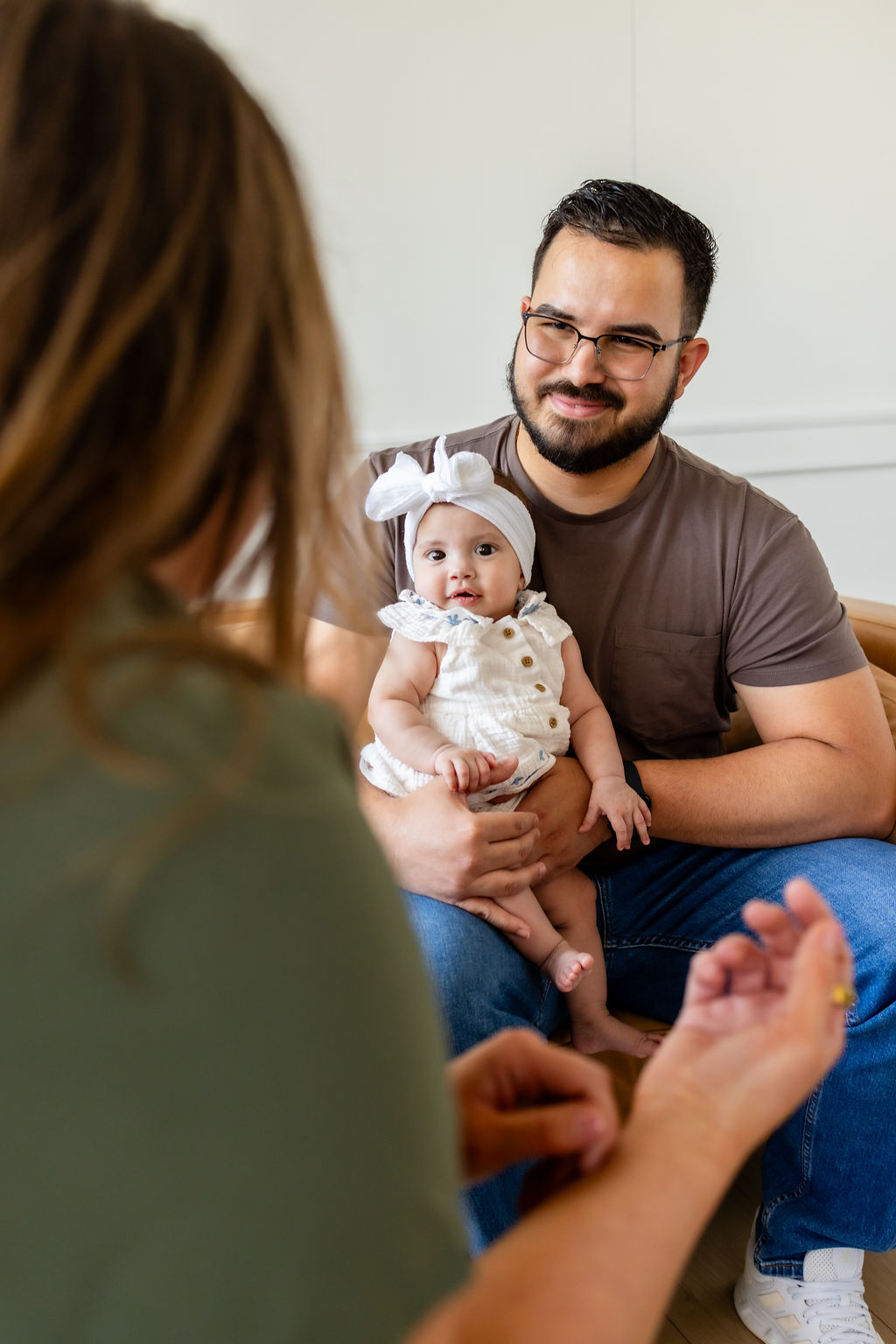
A father holding an infant while talking with a clinician

For Referring Teams

Working with NICU teams, pediatricians, and follow-up providers.

NICU Discharge Planning

We are available to be included in discharge planning conversations for families who will need outpatient feeding follow-up. Early coordination helps ensure timely post-discharge scheduling and a smoother transition for families.

NICU Follow-Up Clinics

We accept referrals from NICU follow-up clinic providers identifying post-discharge feeding concerns. Evaluation and therapy summaries can be provided for follow-up clinic documentation upon request.

Pediatric Primary Care

Pediatricians and APPs identifying feeding concerns in former NICU patients during well-child or follow-up visits may refer directly. We coordinate with primary care on intake, growth, and feeding-related recommendations as appropriate.

Dietitian Collaboration

When nutritional management and feeding function overlap, as they frequently do in medically complex infants, we collaborate with registered dietitians to ensure feeding therapy goals align with nutritional targets and that both clinical perspectives inform the care plan.

Complex Care Teams

For patients managed by multidisciplinary complex care or medical home teams, we function as the outpatient feeding and swallowing resource. We communicate clearly and can participate in care coordination as appropriate to the patient's needs.

Lactation Coordination

For NICU graduates whose families are navigating breastfeeding alongside oral feeding development, we work alongside lactation consultants to address oral function, transfer, and feeding progression in a clinically aligned way.

Ready to Refer

Refer a NICU graduate or discuss a post-discharge patient.

To initiate a referral for a post-discharge infant or discuss a patient's clinical situation, contact our team directly. We welcome conversations with NICU teams, pediatricians, follow-up clinic providers, and all other clinical partners involved in neonatal and post-discharge care.